 Almotamar.net Google News
 - Vice President Cheney, visiting a U.S. aircraft carrier in the Persian Gulf, vowed Friday to prevent Iran from acquiring nuclear weapons and "dominating" the region, and he pledged that U.S. forces would keep open the sea lanes that carry about 20 percent of the world's oil trade.
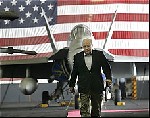
In a speech to sailors and Marines aboard the USS John C. Stennis about 20 miles off Abu Dhabi in the United Arab Emirates, Cheney also said the United States must "persevere" in Iraq and declared that Americans "will not support a policy of retreat."
He spoke a day after the U.S. House of Representatives passed a new emergency war-spending bill aimed at reshaping the Bush administration's war policy in Iraq. The bill would provide partial funding for the war there but hold back most of the money requested by President Bush until he issues a progress report in July. Bush yesterday threatened to veto the bill, although he signaled a willingness to consider "benchmarks" that the Iraqi government would have to meet.
On the Stennis, which leads one of two U.S. carrier groups in the region, Cheney told service members gathered in sweltering heat in a huge hangar below the flight deck that they serve in a "place of tension and many conflicts."
Persian Gulf countries produce more than a quarter of the world's oil, and the vast bulk of it passes through the Strait of Hormuz in tankers en route to oil-importing countries. The strait, located between Oman and Iran, is only about 34 miles wide at its narrowest point, and tankers typically travel in and out of the gulf in two-mile-wide channels through the strait.
"Throughout the region our country has interests to protect and commitments to honor," Cheney said. "With two carrier strike groups in the Gulf, we're sending clear messages to friends and adversaries alike. We'll keep the sea lanes open. We'll stand with our friends in opposing extremism and strategic threats. We'll disrupt attacks on our own forces. We'll continue bringing relief to those who suffer and delivering justice to the enemies of freedom."
Cheney added, "And we'll stand with others to prevent Iran from gaining nuclear weapons and dominating this region. These are important duties, and they must all be done at the same time."
The vice president spoke two days before Iran's hard-line president, Mahmoud Ahmadinejad, was scheduled to visit Abu Dhabi.
After his visit to the carrier, which was cruising about 150 miles off the Iranian coast, Cheney flew by helicopter to Abu Dhabi to meet and have dinner with Emirates Crown Prince Muhammad bin Zayed al-Nahyan.
In Iran, meanwhile, the government was hosting a visit by a North Korean delegation, Iranian news agencies reported.
Iranian Foreign Minister Manouchehr Mottaki said his government "is interested in expansion of ties with North Korea in various political, economic and cultural fields." The visiting North Korean vice foreign minister, Kim Yong Il, "stressed Iran's right to access to nuclear energy for peaceful purposes and voiced his country's readiness to further boost cooperation with Iran in various economic fields," the official Islamic Republic News agency reported.
At the same time, Iran's top nuclear negotiator, Ali Larijani, warned that a compromise over the country's nuclear program will not be possible if the West continues to demand that Iran suspend a program to enrich uranium, the Associated Press reported.
In his speech on the Stennis, Cheney told the assembled sailors and Marines that "success in Iraq remains critical to our national security."
He said, "The ultimate solution in Iraq will be a political solution. But that requires basic security, especially in Baghdad, where our troops are working beside Iraqi forces to carry out a new strategy."
Cheney said that during a visit to Baghdad at the start of his Middle East tour, the top U.S. commander in Iraq, Army Gen. David H. Petraeus, cautioned "that we can expect more violence as [enemies] try to destroy the hopes of the Iraqi people." But he said he was also told of "the progress that's been made in fighting al-Qaeda terrorists, seizing weapons and getting actionable intelligence."
"The job now is to persevere in every area of operations -- from Baghdad to Anbar province to the border areas," Cheney said.
Vowing that "America will stay on the offensive in the war on terror," Cheney said U.S. forces will be "flexible" and "adapt to conditions on the ground."
"And I want you to know that the American people will not support a policy of retreat," he said. "We want to complete the mission, we want to get it done right, and then we want to return home with honor."


 Cheney Vows to Prevent Iran From 'Dominating' Region



