 Almotamar.net
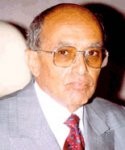
 - The political advisor to the president of the republic, second deputy leader of the General People's Congress (GPC) Dr Abdulkarim al-Eryany said Yemen's location, population and natural resources are the main attraction of investments. Dr al-Eryany added that the unexpected response of the investment conference held in Sana'a is a sure evidence of Yemen's banking on the fact that it has cap [abilities of large-scale investment activity.
Dr al-Eryany drew the attention to the impediment that the government has to surmount, i.e. weakness of the technical education and judicial establishments, calling for the removal of depending on seeking others' help and qualifying sufficient local cadres the investor can depend on.
In an interview to Al-Arab newspaper al-Eryany said " Yemen is facing three challenges and if it can overcome them it would be among the best countries attracting investors because there are geography, climate and a large market for more than 20 million people in addition to proximity to regions of consumption particularly the African side. The challenges are waters, abnormal population growth and an education establishment that has not completed its foreseeable modern structure."
Regarding the confrontation between the west and Iran Al-Eryany said President Ali Abdullah Saleh expressed Yemen's stand that is refusing of any use of force because force would not solve the problem, adding that what has been happening in Iraq is the best evidence of that. He said the use of force against Iran by the United States and Israel will create a similar problem.
He described the talk that Iran will use the nuclear weapon against Israel as cock-and-bull story because Iran is not engaged in war with Israel and if Iran wanted to strike on Israel it will do that with non-nuclear means.
Al-Eryany affirmed that Yemen's stand regarding the second Gulf War and specifically the foreign intervention in Iraq was a proper stand before the war took place and remains correct after it has happened. He said Yemen, even before the Americans, the British and other states and before the Arab countries, warned against the danger of Iraq occupation. He maintained to say "I think Yemen has nothing to regret about its opposing stand to the principle Iraq occupation."
Regarding the Arab peace initiative Dr al-Eryany said it has not led to a result and the people have the right to say it is a free of charge concession to Israel because Israel doesn't want peace but politically I can say it is a good political move." Al-Eryany wonders about the stand of silence of the international community and wondered what can be offered more than what the Arab initiative offers.
He said terror, despite its badness, has created a climate that made it a means of expressing rejection and it is the worst of means of refusal because it has used violence. According to al-Eryany, terror did sow a sudden satanic plant but the happenings in the twentieth century were they that created the proper climate for it, namely, starting from oppression against the Irish and the Palestinians to defeats of the Arab nation before Israel. Al-Eryany likened terror to the phenomenon of Saladin versus the assassin's stratagems in the Arab Islamic history, expecting its non-continuation for long. He said it is a phenomenon that the world can deal with by realizing the causes of its emergence and to tackle those problems that justified it.
On the project of the Arab Charter for Democracy in which he participated in Doha conference he said "When I attended in Chile the conference on democracies society I found out that the American states organisation were at the beginning of democracy labour and have prepared a charter obliging those states to adopt pluralist democracy though Latin America was the impregnable stronghold of military and feudalist dictatorships. According to that charter the states are committed to political pluralism, human rights, peaceful transfer of power and not take power by force. I admired that charter and told myself how we in the Arab world are in need of such a charter." He added "Until now I am endeavouring to ensure a meeting of a number of Arab civil society organisations interested in this subject in order to adopt the charter and go to their governments in the hope it will be a charter adopted by a number of the Arab governments. At the same time if these organisations adopted the charter we will present it to the Arab League, the general secretariat saw that possible because some of the Arab countries may refuse it and the Arab League depends on unanimity. But I don't find anything in the charter imposes something contradicting its society, behaviour and ideology. It is difficult to be adopted through Arab states thus we found out it is better to adopt through civil society organisations and they in turn endeavour with their governments to become an Arab charter for democracy. The need is clear because there is substantial shortage in the democratic practices and the first report on Arab development is quite clear in this regard."


 Government should surmount technical education &judiciary weakness: Al-Eryany



