 Reuters
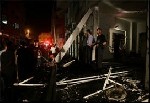
 - GAZA (Reuters) - In what looked ever more like civil war, the forces of Palestinian President Mahmoud Abbas battled supporters of the Islamist prime minister across Gaza on Tuesday, the bloodiest day of factional fighting in months.
The largest security force loyal to Abbas, who is favoured by Western powers, was ordered on to the streets to defeat what his secular Fatah supporters called a "coup" by Hamas Islamists after Hamas gunmen stormed Fatah security bases in Gaza.
At least 22 people were killed and 70 wounded, hospital officials said, taking to 42 the number of dead in the coastal enclave since Saturday. Early on Tuesday, the Gaza homes of both Abbas and Prime Minister Ismail Haniyeh of Hamas were fired on.
As Fatah leaders met to consider quitting a three-month-old unity government, the European Union said there was an imminent risk of civil war and U.N. Secretary General Ban Ki-moon urged support for Abbas's efforts "to restore law and order".
Haniyeh and Abbas both called for restraint and talks but, as each side accused the other of siding with their Israeli adversaries, there was little sign of fighters paying heed.
Israeli Prime Minister Ehud Olmert, an arch-foe of Hamas, said for the first time that proposals to station international peacekeepers in Gaza be given "serious consideration". Israel has been cool on such ideas in the past but ministers have said lately such a force could cut off arms and supplies to Hamas.
Hamas gunmen swept into Fatah posts, residents said. The northern and central Gaza Strip seemed under Hamas control during the day. At one stage, Hamas fighters gave Fatah forces half an hour to evacuate bases, in an unprecedented ultimatum.
Intense gunfire and explosions were later heard from a base of Abbas's National Security Forces in Gaza City. Reinforcements for the NSF moved in vehicles through the deserted streets of Gaza City toward areas where Hamas had asserted control.
"Advance!" NSF commanders ordered, as Hamas radio stations were briefly jammed by music praising Fatah military leaders.
"Confront the seekers of the coup!"
At least 16 people were killed in ensuing evening battles, according to hospital officials -- including 11 in one clash that Hamas said gave it control of a major NSF base in the north of the Strip. Hamas officials said six of the 16 dead were its fighters. Fatah officials said only they lost "several" dead.
DECISION
Abbas, who succeeded the late Yasser Arafat in 2004, convened a meeting of Fatah's Central Committee in the West Bank city of Ramallah, near Jerusalem, in the evening. Aides said leaders would decide whether to quit the government.
If they do leave, along with some independent ministers, Abbas could fire the government and try to rule by decree. A new cabinet would need approval from the Hamas-led parliament.
Most of the Gaza Strip's 1.5 million people took refuge in their homes. Crammed into a 45 km sliver of coast and surrounded by an Israeli security cordon, they have little chance to flee through the restricted main crossing into Egypt.
"I think we are in Iraq, not in Gaza," Ammar, a 40-year-old father of six, said. "Snipers on rooftops killing people. Bodies mutilated and dumped in the streets in very humiliating ways.
"What else does civil war mean but this?"
Since Hamas won an election in January 2006, boosted by its support among the poor of Gaza, more than 600 Palestinians have been killed in factional fighting, according to one estimate.
After some months of relative calm, fighting flared up again last month before easing following a truce brokered by Egypt.
The United States has been helping train and arm Abbas's forces, citing the Fatah leader as a moderate committed to peace and a counterweight to Hamas, which has ties to Iran and Syria.


 Bloody day in Gaza raises civil war fears



