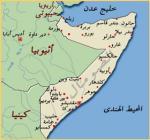
 Almotamar.net, agencies
 - Somali transitional federal government (TFG) Abdullahi Yusuf expressed Thursday his thanking and appreciation for the Yemeni political leadership represented by president Ali Abdullah Saleh for his efforts to support the efforts for realization of the Somali reconciliation as well as Yemen's support for the Somali TFG institutions.
the Somali president announced Thursday that the national reconciliation conference is scheduled to be held next Sunday in Mogadishu despite of continuation of acts of violence
On the other hand, Yemen's ambassador to Somalia Ahmed Hamid Omar reiterated the firm stands of the Yemeni government in supporting the institutions of the Somali TFG. Received by the head of the Somali TFG in Mogadishu on Friday the ambassador praised the efforts exerted by the Somali security forces for consolidating security and stability n the capital Mogadishu.
After a months-long delay, the latest Somali peace conference is due to start in Mogadishu on Sunday but hopes of a breakthrough remain low amid raging violence and a boycott by key players.
The so-called reconciliation conference was called by the transitional federal government (TFG) after it defeated an Islamist movement with the help of Ethiopia in January, but their main adversaries have rejected the meeting.
The virtually homeless government, which has failed to bring the restive country under control in three years of existence, is staging the conference at a former police warehouse in northern Mogadishu.
The area, nearby the presidential palace, came under mortar attack late on Wednesday but Somali President Abdullahi Yusuf put on a brave face in front of reporters.
"I am telling you that it will be held as scheduled," he said. "No matter how much violence escalates in Mogadishu, our will will not be broken."
Observers said there was the danger that insurgent attacks could still thwart the latest peace initiative.
With 2 300 delegates expected for talks that could last weeks, government forces beefed up security around the site and across Mogadishu.
"Adequate security is in place and the delegates will be safe," said General Abdi Hassan Awale Qeybdid, a former warlord and the country's police chief.
Although no clear agenda has been formulated, the conference was designed to discuss a power-sharing arrangement known as "4.5", bringing four major clans and a smaller one together.
Yet the conference has been rejected outright by the Islamic Courts Union (ICU), which was toppled after weeks of heavy fighting with the joint TFG and Ethiopian forces.
ICU leaders exiled in Eritrea have demanded that such a conference be held outside of Somalia in a neutral country and only after the withdrawal of Ethiopian troops.
"We are not attending a conference aimed at misleading the Somalis as well as other countries. No peace deal is expected from a conference attended by TFG loyalists," a senior ICU official said on condition of anonymity from Asmara.
The transitional government blames the Islamist group for the daily guerrilla attacks that have rocked Mogadishu since the group's defeat.
The Hawiye clan, dominant in the capital and many of whose members also belong to the ICU, is divided over the conference.
"The conference would make sense if it was bringing rival politicians and armed groups to the same table," said Ahmed Diriye, a spokesperson for the Hawiye.
"But if the idea is to talk about a non-existent tribal conflict, it's a waste of money and energy," he said.
Another Hawiye faction said it would attend the conference.
Asmara-based Islamist leaders and opposition lawmakers have called for their own conference in Eritrea.
"The constituent congress will form a coalition with the aim of liberating Somalia from the yoke of the Ethiopian occupation and their collaborators," they said in a statement.
Reconciliation and peace initiatives were also undertaken in 2000 and 2002 but violence has continued to convulse the country, which has lacked a functioning central authority since the 1991 ouster of dictator Mohamed Siad Barre.


 Somali reconciliation conference to be kicked off



