Badriya Yasmeen Dowe, thestar online - The Islamic Arts Museum Malaysia (IAMM) is currently holding an exhibition on the role of women in the Islamic world. The image of Muslim women was, to some extent, set in the 19th century when they were depicted as less than real individuals in art and literature.
Today, the view held by many in the West is that Muslim women are second-class citizens, trapped in their homes and hidden behind the veil. While this latter view is true in certain countries, it is by no means the norm as often the oppression of women is due to cultural rather than religious traditions.
Since the beginning of Islam, women have played important roles in society. Khadijah, Prophet Muhammad’s first wife, was the first convert to Islam. His third wife, Aisha, was a great contributor to the sayings of the Prophet (hadith), which went on to become a component of the shar’ia (Islamic law).
The deeds of these women secured them a place in the annals of Islam and it would be hard to find a single Muslim that did not know who they were.
Unfortunately, the same acknowledgment has not been extended to the many women who were able to attain the exalted position of sovereign. Occasionally, in Islamic history, women ruled jointly with their husbands, but they have also governed their own territories outright, having their names mentioned in the Friday khutba (sermon), and inscribed on coins.
One such woman was Yemen’s Arwa binti Ahmad al-Sulayhi. She was born in 1048 in Haraz, Yemen, a member of the Sulayhid dynasty, vassals of the Fatimid dynasty in Cairo.
Arwa was taught that in Yemen, the wife of the ruler shared power with her husband and was not meant to stagnate in the harem. At 17, Arwa was married to her cousin al-Mukarram. After considerable upheaval, al-Mukarram passed his power on to Arwa, and retreated from public life.
Queen Arwa focused her attention on the welfare of her people, building mosques, roads and fountains. She also took a deep interest in cultural and religious studies and set up several centres for education. Arwa ruled Yemen for over half a century, never losing the support of her people, who affectionately called her Balqis al-Sughra (Young Queen of Sheba).
In the Indian subcontinent, Nur Jehan may be less famous than Mumtaz Mahal, but her fame among the Mughals was far greater. Born Mihr-un-Nisa (Sun Among Women) in 1577, she was a handmaiden at the palace.
Prince Selim (Jahangir) fell in love with her when he spotted her at the palace bazaar in the spring of 1611, but his desire to marry her was thwarted by his father, Emperor Akbar.
Eventually the two were married and she was given the honorific title Nur Jehan Begum (Light of the World Queen).
Nur Jehan brought the emperor under her influence, concentrating real political power in her hands. Using the emperor as a puppet, this wily individual ruled in his name for 11 years, from 1616 till 1627. She became a legend, sitting on the throne alongside the emperor, with firman (pronouncements) and coins issued in her name.
Women have been among the most significant factors behind the success of Islamic empires since the 7th century. Their faith, intelligence, influence and beauty have been central to Islamic history. Their role in religious, military and social affairs was acknowledged as early as during the time of the Prophet.
Why then is so little known about these extraordinary women?
The reason for this is the scant attention they were given by contemporary and later historians, who either completely omitted them or downplayed their significance. Though Islam raised the status of women and ensured them certain rights, the society they lived in was still extremely patriarchal. And there were those within society who found no pride in being ruled by women.
The two above-mentioned queens are just a sampling of the plethora of Muslim women that were able to rise to prominent positions. The exhibition Faith and Power: Women in Islam at the Islamic Arts Museum Malaysia (IAMM) brings these women out of obscurity and gives them their pride of place in Islamic history. The exhibition runs until July 4, this year.
There is an accompanying catalogue available for purchase at the IAMM gift shop which provides a more comprehensive look at the lives and achievements of the women featured in the exhibition. The women highlighted come from all over the Islamic world, from Spain to South-East Asia, and span the entire Islamic period up till the present day.
A forum will be held at the IAMM auditorium to discuss issues relevant to the modern Muslim women. This is open to the public and free of charge. The tentative date is May 31.
|


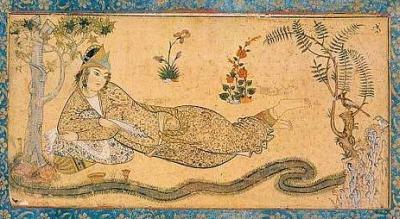
 Women of power and influence



