Almotamar.net, Al Khaleej - Members of the American delegation representing the State and Defence Departments praised Wednesday Yemen's successful experiment in the dialogue aimed at re-incorporation into the society of many elements that were caught over terrorist issues.
In their talks with Yemeni officials he members of the American delegation praised Yemen pursuits concerning the development of legislations related to combating terrorism. The Yemeni Minister of Endowments and Guidance Hamoud al-Hattar discussed in his meeting Tuesday with the American delegation of State and Defence Departments the special arrangements regarding transferring the Yemenis detained in Guantanamo so that to be handed over to Yemen.
Yemeni news agency mentioned that he meeting discussed aspects related to a dialogue programme with he detainees after their return to Yemen in the way securing their incorporation into the society. Endowments Minister reviewed the arrangements Yemen has made for receiving its citizens and preparations for their rehabilitation. The Minister also asked the American delegation to speed up return of the Yemeni detainees, expressing his confidence that the dialogue to be conducted with the detainees would contribute to straighten any wrong ideas implanted in their minds, which are contradictory to principles of the Islamic religion.
The United Arab Emirates acknowledged on Tuesday that two of its pilots were killed when their military aggression plane crashed over Jawf province, a military official said
The official added that the aggressive crashed plane was an apache that was
Artillery of the army and popular shelled a gathering of Saudi-paid mercenaries in al-Moqadra area in Serwah district of Marib province, a military official said on Tuesday.
Meanwhile, dozens of Saudi-paid mercenaries were killed and others injured in Wadi al-Theek in the district, the official added.
The army and popular forces carried out on Monday unique military operations in Taiz province.
A military official said that a number of Saudi-paid mercenaries were killed at the hands of the army and popular forces in al-Jazami Hill in al-Kadaha area in al-Ma'afer district.
A Saudi aggression fighter jet targeted a citizen's car driving in Fara area of Kutaf district in Saada province overnight, killing the driver and injuring his friend, a security official said on Monday.
The army artillery and popular committees launched a fierce attack on Saudi-paid mercenaries' sites in Jawf province, a military official said on Monday.
The attack destroyed a military vehicle belonging to the mercenaries and killed all on board in Sabran area in khab and shaaf district.
Scores of Saudi enemy soldiers were killed and injured on Sunday when the army and popular forces repelled a Saudi military attempt to sneak into Shurfah site in the border province of Najran, a military official said.
The operation was accomplished successfully against the Saudi
The army and popular committees have killed a total of 18 Saudi-paid mercenaries in sniper operations over the past hours in the central province of Marib, a military official said on Sunday.
Ten mercenaries were killed in Nehm district and eight others were killed in Serwah district, said the official.
Saudi aggression warplanes have launched more than 49 airstrikes over the past hours on several residential areas across Yemen, a security official said on Sunday.
The airstrikes targeted the areas of Malahiz and Husama in Dhahir district, and areas Thuban, Masahif and Sdad in Bakim district of northern Saada province.


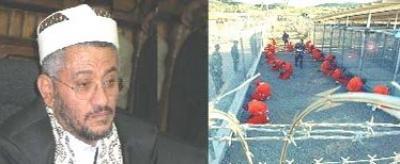
 Yemen discusses arrangements for receiving prisoners from Guantanamo



