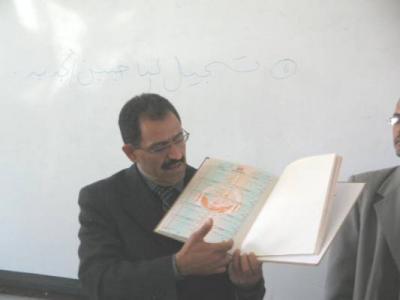
Almotamar.net - A delegation representing the Supreme Commission for Elections and Referendum SCER, representing is to take part in the International Conference on Elections management to be held in Kuwait on Sunday. The delegation, which left for Kuwait on Saturday, includes member of the SCER, the Head of Technical Affairs and Planning Dr Mohammed al-Siyani and membership of the Head of the sector of Legal Affairs and the Director General for Training.
Dr al-Siyani said the conference, organised in collaboration with the US State Department’s Middle East Partnership Centre, would over two days discuss a number of issues related to management of the electoral process in the Arabian Peninsula and the Gulf.
Yemen news agency quoted Dr al-Siyani as saying the conference is a good opportunity for the exchange of expertise among the participant countries in the aspects connected to managing the electoral process.
On the other hand the Head of the SCER’s Sector for Information Abdeh Mohammed al-Janadi valued all forms of consultative and technical support offered to the SCER in Yemen by the International Foundation for Electoral Systems IFES, confirming keenness of the SCER on continuation of partnership and cooperation between the two sides.
The United Arab Emirates acknowledged on Tuesday that two of its pilots were killed when their military aggression plane crashed over Jawf province, a military official said
The official added that the aggressive crashed plane was an apache that was
Artillery of the army and popular shelled a gathering of Saudi-paid mercenaries in al-Moqadra area in Serwah district of Marib province, a military official said on Tuesday.
Meanwhile, dozens of Saudi-paid mercenaries were killed and others injured in Wadi al-Theek in the district, the official added.
The army and popular forces carried out on Monday unique military operations in Taiz province.
A military official said that a number of Saudi-paid mercenaries were killed at the hands of the army and popular forces in al-Jazami Hill in al-Kadaha area in al-Ma'afer district.
A Saudi aggression fighter jet targeted a citizen's car driving in Fara area of Kutaf district in Saada province overnight, killing the driver and injuring his friend, a security official said on Monday.
The army artillery and popular committees launched a fierce attack on Saudi-paid mercenaries' sites in Jawf province, a military official said on Monday.
The attack destroyed a military vehicle belonging to the mercenaries and killed all on board in Sabran area in khab and shaaf district.
Scores of Saudi enemy soldiers were killed and injured on Sunday when the army and popular forces repelled a Saudi military attempt to sneak into Shurfah site in the border province of Najran, a military official said.
The operation was accomplished successfully against the Saudi
The army and popular committees have killed a total of 18 Saudi-paid mercenaries in sniper operations over the past hours in the central province of Marib, a military official said on Sunday.
Ten mercenaries were killed in Nehm district and eight others were killed in Serwah district, said the official.
Saudi aggression warplanes have launched more than 49 airstrikes over the past hours on several residential areas across Yemen, a security official said on Sunday.
The airstrikes targeted the areas of Malahiz and Husama in Dhahir district, and areas Thuban, Masahif and Sdad in Bakim district of northern Saada province.


 Yemen participates in international conference on elections management



