Almotamar.net - Vice President Abdo Rabbo Mansour Hadi discussed here on Monday with Russian and Chinese ambassadors to Yemen the latest developments in the local arena.
Hadi briefed Russian ambassador Sergei Kozlov and Chinese ambassador Liu Denglin the nature and outcomes of the meetings and consultations at the national and regional levels to solve the country's political crisis.
All the consultations focus on reaching an agreement on the mechanism to implement the Gulf initiative based on the General People Congress (GPC) General Committee's decisions issued in the extraordinary meeting held a few days ago, said the Vice President.
He touched on aftermaths of the clashes taken place in Abyan province between the armed forces and al-Qaeda, saying they were resulted in great losses and damages in private and governmental facilities and the citizens' houses as well.
He added that the province really needed financial and in-kind aid from the European Union (EU), Russia and China for reconstruction and assisting the displaced people, over 100,000, to return to their homes.
Hadi voiced his appreciation of the 30 million Yuan assistance granted from China to the Abyan displaced people, praising the ceaseless positive attitude in support with Yemen in various circumstances.
Fighting on terrorism is an international responsibility, Yemen should not bear it alone, Hadi said.
The two diplomats asserted their countries' support for the stability of Yemen, as a friend country, saying that Russia and China would spare no effort to maintain its unity and security.
The United Arab Emirates acknowledged on Tuesday that two of its pilots were killed when their military aggression plane crashed over Jawf province, a military official said
The official added that the aggressive crashed plane was an apache that was
Artillery of the army and popular shelled a gathering of Saudi-paid mercenaries in al-Moqadra area in Serwah district of Marib province, a military official said on Tuesday.
Meanwhile, dozens of Saudi-paid mercenaries were killed and others injured in Wadi al-Theek in the district, the official added.
The army and popular forces carried out on Monday unique military operations in Taiz province.
A military official said that a number of Saudi-paid mercenaries were killed at the hands of the army and popular forces in al-Jazami Hill in al-Kadaha area in al-Ma'afer district.
A Saudi aggression fighter jet targeted a citizen's car driving in Fara area of Kutaf district in Saada province overnight, killing the driver and injuring his friend, a security official said on Monday.
The army artillery and popular committees launched a fierce attack on Saudi-paid mercenaries' sites in Jawf province, a military official said on Monday.
The attack destroyed a military vehicle belonging to the mercenaries and killed all on board in Sabran area in khab and shaaf district.
Scores of Saudi enemy soldiers were killed and injured on Sunday when the army and popular forces repelled a Saudi military attempt to sneak into Shurfah site in the border province of Najran, a military official said.
The operation was accomplished successfully against the Saudi
The army and popular committees have killed a total of 18 Saudi-paid mercenaries in sniper operations over the past hours in the central province of Marib, a military official said on Sunday.
Ten mercenaries were killed in Nehm district and eight others were killed in Serwah district, said the official.
Saudi aggression warplanes have launched more than 49 airstrikes over the past hours on several residential areas across Yemen, a security official said on Sunday.
The airstrikes targeted the areas of Malahiz and Husama in Dhahir district, and areas Thuban, Masahif and Sdad in Bakim district of northern Saada province.


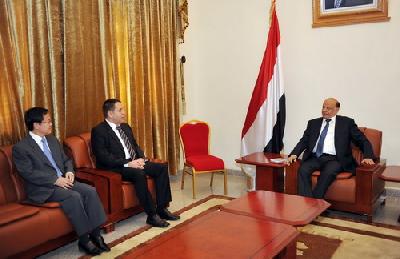
 VP discusses local developments with Russian, Chinese diplomats



