 Google News Forbes
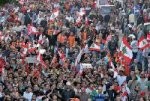
 - Arab diplomatic efforts to end Lebanon's political crisis resumed Monday, a day after hundreds of thousands protesters swarmed downtown Beirut to pressure the U.S.-backed prime minister to quit.
Mustafa Osman Ismail, an envoy from Sudan, arrived in the Lebanese capital from neighboring Syria to meet with Prime Minister Fuad Saniora and leaders of the Hezbollah-led opposition factions.
Earlier Monday, Ismail told journalists in Damascus that rival parties were favorably considering Sudanese proposals to "contain the current crisis in Lebanon." He did not elaborate.
Arab League Secretary-General Amr Moussa also cut short a trip in Washington and was expected in Lebanon on Tuesday at the request of Parliament Speaker Nabih Berri, Lebanon's An-Nahar newspaper reported.
Both Ismail and Moussa were in Beirut last week to try to mediate between the factions.
Lebanon's political crisis began after Saniora rejected Hezbollah's demand for a national unity government that would give the guerrilla group and its allies Cabinet veto power. In response, six pro-Hezbollah ministers resigned from the Cabinet and the militant group has staged demonstrations in downtown Beirut since Dec. 1 to try to pressure the prime minister into quitting.
Saniora, emboldened by Western and Arab support, has refused to step down but has been holed up in his downtown headquarters with several other ministers surrounded by riot police and troops in armored vehicles.
Relations between the two sides collapsed after Hezbollah's war with Israel over the summer and U.N. efforts to create an international tribunal to prosecute the suspects in the 2005 assassination of former Prime Minister Rafik Hariri. Many accuse Syria of being involved in the killing, a charge Damascus has denied.
The guerrilla group's support among Shiites surged after its fierce war with Israel and emboldened it to push for more political power.
But pro-government, anti-Syrian factions resent Hezbollah for sparking the war when it captured two Israeli soldiers in a cross-border raid and accuse the militant group's two main backers - Syria and Iran - of seeking to overthrow the government.
Hezbollah, meanwhile, claims Saniora and some in his government of being an agent of the United States and working with Israel to destroy the guerrilla force.
The tension has divided the country, with most Sunni Muslims supporting Saniora, a Sunni, and Shiites backing Hezbollah. Christians are split.
During Sunday's massive anti-government rally, Christian opposition leader Michel Aoun, a Hezbollah ally, gave Saniora an ultimatum of "a few days" to either accept a national unity government or face further unspecified action that he said would eventually lead to a transitional government and early elections. Sheik Naim Kassem, Hezbollah's deputy leader, also told the crowd that the opposition was willing to stay on the streets for months to achieve its goal.
Saniora, though, showed no signs of backing down and called on all sides to "stick to the democratic system" and return to negotiations.

 Arab Envoys Move to End Lebanon Crisis