 almoyamar.net CNN
 - BAGHDAD, Iraq (CNN) -- Iraqi President Jalal Talabani said Wednesday that his government should delay the executions of Saddam Hussein's two co-defendants in light of sectarian tensions and the botched handling of the toppled leader's execution.
"My opinion is that we slow down a bit and take into account the current conditions in the country," said Talabani, a Kurd, in referring to the brutal sectarian divide between Iraq's Sunni Arabs and Shiites.
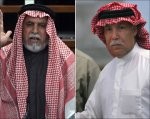
Iraqi government spokesman Ali al-Dabbagh said Tuesday that Barzan Hassan, Hussein's half brother and former intelligence chief, and Awad Bandar, former head of Iraq's Revolutionary Court, are expected to be hanged in a "matter of days."
"We have some logistical issues," al-Dabbagh said. "The government is determined to carry out the sentence."
Along with Saddam, Barzan and Bandar were sentenced to death for their roles in the 1982 massacre of Shiites in Dujail, north of Baghdad. The crackdown occurred shortly after an assassination attempt against Saddam Hussein.
The 69-year-old former Iraqi ruler was hanged December 30 after an appeals court upheld his conviction in the Dujail deaths.
President Bush was upset after viewing an unauthorized video of the execution and compared his emotions to those he felt after seeing photos of the abuse exacted on naked and restrained captives at Abu Ghraib prison outside Baghdad, the White House said Wednesday.
At the execution site, video shot on a cell phone camera and later leaked onto the Internet showed Shiites taunting Hussein, a Sunni, in the moments before his death -- fueling rumors the hanging was an act of revenge against Sunnis.
Iraqi Prime Minister Nuri al-Maliki sought to dispel such fears Tuesday, calling the video "an isolated act" and saying that an inquiry will result in punishment.
At a press conference in Sulaimaniya with Zalmay Khalilzad, U.S. ambassador to Iraq, Talabani reiterated his long-standing opposition to the death penalty and urged reconciliation.
"We must strive especially now that Saddam is executed to be more forgiving with each other," he said.
But he said that Iraq's constitutional ban on Baathists, Hussein's party members, from participating in government should stand.
Meanwhile, Iraq's national security adviser, Mowaffak al-Rubaie, visited Grand Ayatollah Ali al-Sistani and Ayatollah Mohammed Saeed al-Hakeem in Najaf and said he had won their backing on the disarmament of militias.
Al-Sistani "insisted that the weapons should be only in the hand of the government forces, and the law should be applied on all the Iraqi citizens with no exception," al-Rubaie said.
Some militias -- such as radical Shiite cleric Muqtada al-Sadr's Mehdi Army -- are suspected to be behind much of the country's sectarian violence.
In addition, three U.S. soldiers were killed Tuesday -- two in Anbar province and another in Diyala province, the U.S. military said Wednesday.
The U.S. military has suffered 3,017 fatalities in the Iraq war, including seven civilian military contractors. Thirteen have died in January.
President Bush is expected to announce Wednesday a plan to increase troops in Iraq by 21,000 to 24,000 to help quell violence in Baghdad, a U.S. official said.
The speech, scheduled for 9 p.m. ET, will be shown on CNN, with a preview beginning at 7 p.m. The address will be live online on CNN Pipeline.
Though the plan has yet to be officially announced, an influential group of Sunni scholars in Iraq is already condemning the proposed new strategy.
"The inability of 140,000 soldiers to achieve their goals in battle makes it unlikely that another 20,000 will be able to do that," the Association of Muslim Scholars said in a statement on Wednesday.

 Iraqi president: Delay executions